
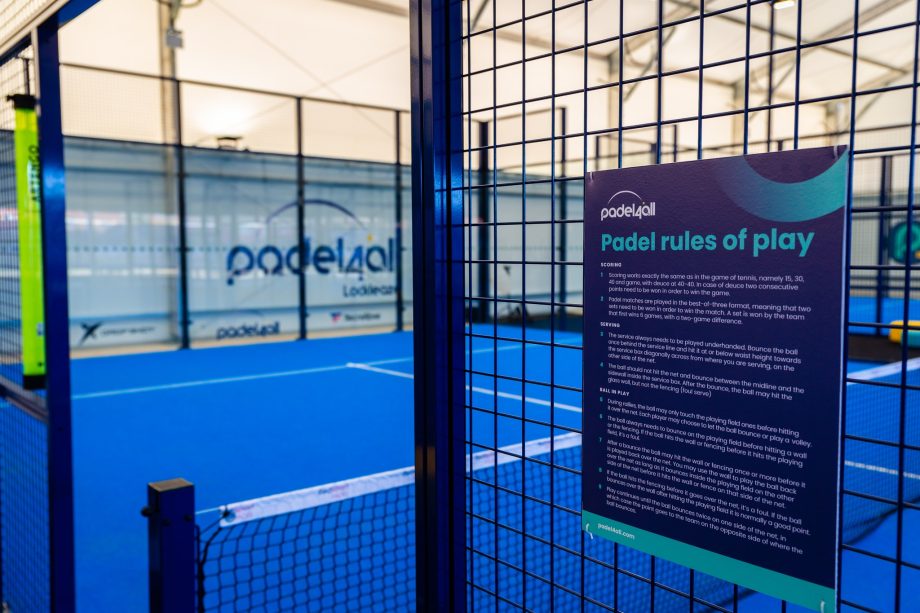
Padel Tennis, a sport that combines elements of tennis, squash, and racquetball, is known for its fast-paced and social nature. While the game is relatively simple to pick up, understanding the basic rules is crucial for anyone looking to start playing. This article aims to demystify the rules of Padel, ensuring beginners can step onto the court with confidence.
The Court
A standard Padel court is 10 meters wide and 20 meters long, enclosed by walls made of glass or solid material. The court is divided into two halves by a net, with service boxes and no-ad zones marked similar to tennis.
The Equipment
Padel uses a solid, stringless racket, which is smaller and more compact than a tennis racket. The balls used in Padel are similar to tennis balls but with slightly lower pressure.
Scoring
Padel scoring closely follows tennis, with a few adaptations:
- Points progress from 15 to 30, then 40, and game point.
- Games are grouped into sets, with players needing to win six games by a margin of two to clinch a set.
- Matches are typically best of three sets.
Serving
- The serve must be underhand, with the server standing behind the service line.
- The ball must bounce once in the server’s box before being hit diagonally into the opponent’s service box.
- If the ball hits the net and lands in the correct service box, a let is called, and the serve is retaken. Two consecutive faults result in the loss of the point.
The Play
- Players can hit the ball directly or after it has rebounded off the wall, but it must not bounce more than once on the ground.
- The walls can be used to return shots, adding a unique strategic element to the game.
- Volleys are allowed, but the ball must not be hit before it crosses the net.
Points
- Points are won when the opposing team fails to return the ball, hits the ball out of the court (without it touching the opponent’s side), or commits a double fault on the serve.
- Unlike tennis, there are no advantages after deuce in Padel. The team that wins the point after deuce wins the game.
Change of Ends
Teams change ends after the first, third, and every subsequent odd game of each set to ensure fair play conditions, similar to tennis.
Etiquette and Conduct
Padel is known for its social and friendly atmosphere. Players are expected to maintain sportsmanship, with polite conduct and respect for opponents, umpires, and the rules of the game.
Conclusion
Understanding the basic rules of Padel Tennis is the first step towards enjoying this engaging sport. With its straightforward scoring and dynamic play, Padel is accessible to players of all ages and skill levels. As you become more familiar with the game, you’ll discover the strategic depth and social interaction that make Padel an increasingly popular pastime worldwide.